Tales From a Startup: Opinions
(In the voice of Internet Historian) “Opinion? What are opinions?”
I’ve seen enough engineering and product fights. You probably have too. It usually starts with a proposal and ends with it being held hostage in meeting-room limbo because two brilliant people have two diametrically opposed, deeply passionate positions.
And sometimes, it gets even worse. They will discreetly coerce a junior engineer or PM to adhere to what they think is correct. It’s an underhanded tactic, but it happens all the time when people value winning an argument over building a product.
But here is the hard truth we often forget in the heat of the moment: if there are no concrete data points, opinions are just that—opinions.
In a startup, how we manage these opinions determines whether we build momentum or drown in friction.
The Dangerous Seesaw: Friction vs. Echo Chambers #
Healthy debate is the lifeblood of a good product, but it’s a delicate balancing act.
-
Strong counterpoints held too tightly cause paralyzing friction. Progress grinds to a halt, underhanded lobbying begins in the hallways, and teams burn out arguing over hypotheticals.
-
No counterpoints at all creates a dangerous echo chamber. Everyone nods along just to avoid the drama, and the team risks shipping flawed features because no one wanted to challenge the status quo.
The goal isn’t to eliminate opinions; it’s to convert them into decisions quickly.
In a startup, we rarely have perfect data. If we wait for flawless metrics to justify every choice, we are already late. Velocity is almost always more important than being perfect (more on that in some later blog).
So, how can we bridge the gap between an opinion and a decision when velocity is king? This is what I have learned and adopted: We should look at who has to live with the consequences.
Decisions = Consequence Ownership #
When there isn’t enough data to break a tie, the best path forward is simple: Let the person who has the responsibility to endure the consequences take the call.
This requires a fundamental rethink of hierarchy and relinquishing control at every level of the organization.
1. For the Junior Employee #
A junior engineer or an Associate Product Manager can—and absolutely should—voice their opinion. But they must learn to hold it loosely if their manager or tech lead decides to go a different route.
It might be because the leadership has broader context and knows better. Or, frankly, it might be that they know very little and the junior technical opinion actually holds more merit. But this isn’t a case of the HIPPO (Highest Paid Person’s Opinion) winning just because of a title. It’s about accountability. If the decision blows up, the lead is the one who answers for it. It’s best to voice the piece, but respect the seat.
2. For the Senior Executive #
This rule applies looking downward, too. A senior executive or VP should voice their opinions, but they must hold them loosely when interacting with the team on the ground.
At the end of the day, it is not an executive’s job to act as the stealth Architect or the shadow Product Manager. This comes down to trust. Leaders must trust that their PMs and Architects know enough about their domains to own the outcome; and live with the consequences if it fails.
Trust Takes Time (and That’s Okay) #
Relinquishing control doesn’t happen overnight. Trust takes time to build, especially in high-stakes startup environments.
It’s completely normal to have a few bumps in the road early on. But once that trust is established, more often than not, a nice operational rhythm emerges: opinions are shared openly, debated, but surrendered the moment a decision is made.
My takeaway is to always provide perspective, but remember the ultimate startup golden rule: Agree or disagree, but commit. Don’t let an opinion get in the way of execution.
Or, you can enjoy this Calvin and Hobbes strip:
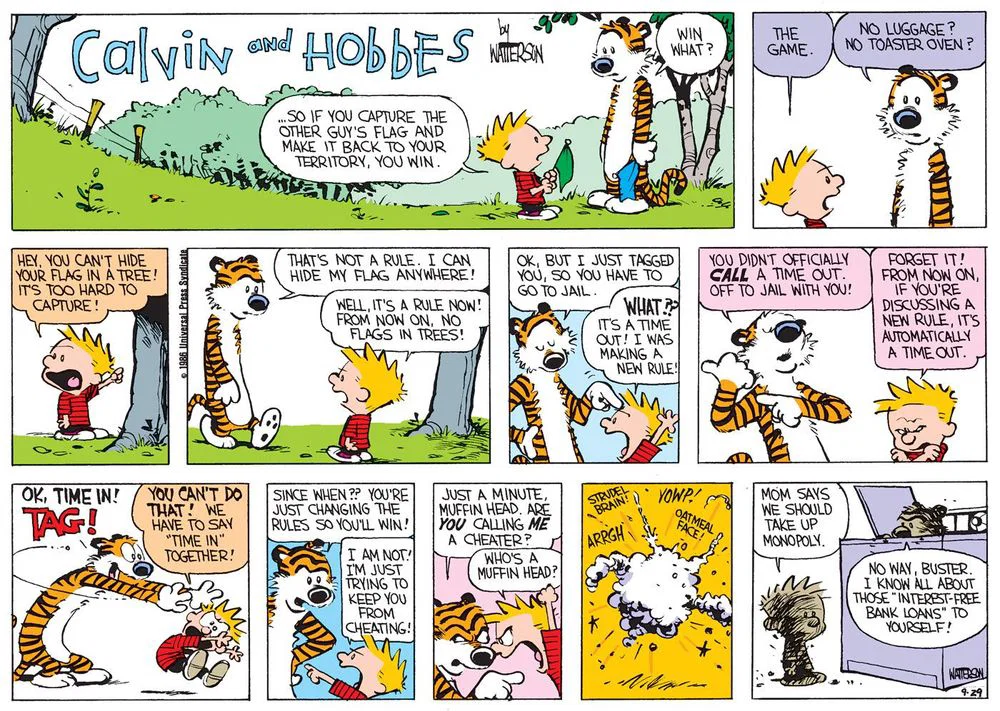
Calvin & Hobbes, October 26, 1986 by Bill Watterson